
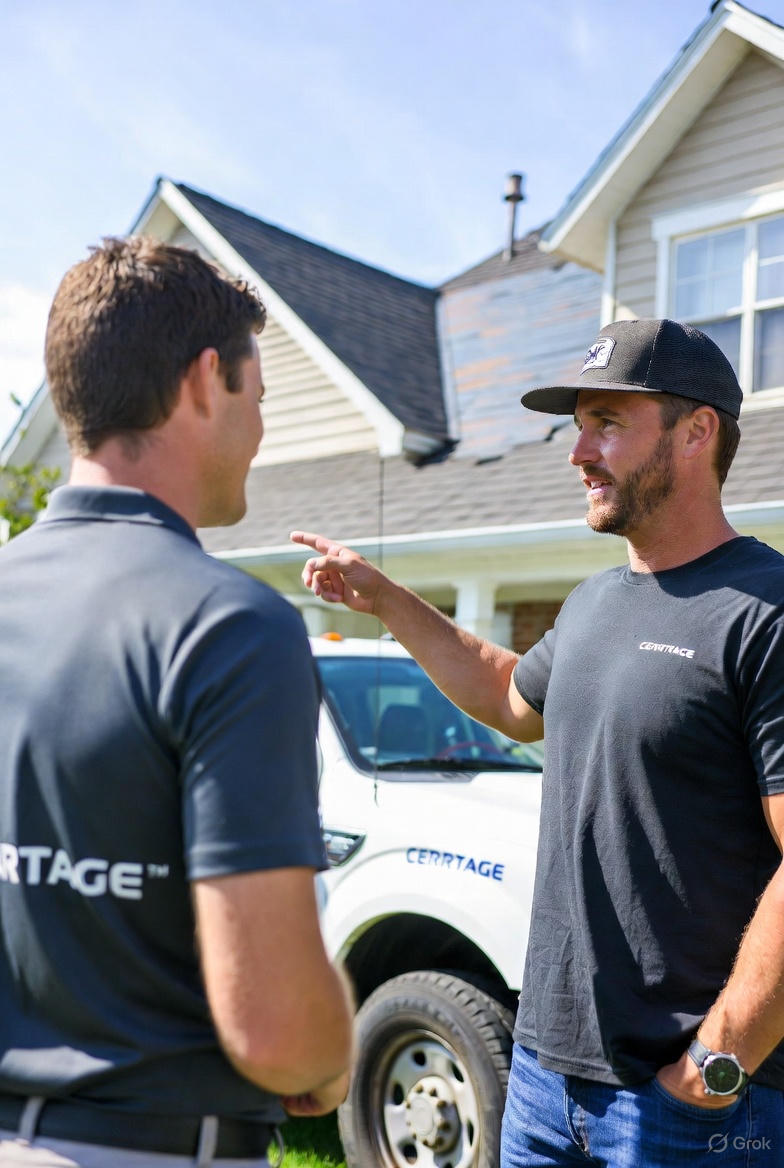
Hiring a company for residential roofing services is one of the most high-stakes, high-cost decisions a homeowner will ever make. It’s not just a home improvement project; it’s a critical investment in your property’s structural integrity and long-term value. Yet, many homeowners are tempted to shop for a new roof the same way they shop for a new appliance: by comparing prices. This approach is dangerous. When it comes to the complex, liability-filled job of protecting your home from the elements, the price of the service matters far less than the quality of the provider. This is why vetting your home exterior contractors for experience and proper licensing isn’t just a good idea—it’s the only thing that separates a 30-year solution from a catastrophic failure.
What is a “Residential Roofing Service?” It’s More Than Just Shingles
A common misconception is that a roof is just the top layer of shingles you see from the street. This view is what gets homeowners into trouble. A professional roofing service understands that a roof is a complete, integrated system of components that must work in perfect harmony.
Understanding the Roof as a Complete System
Your roof is an assembly of at least six distinct layers, each with a specific job:
- Decking: The wood “skin” (usually plywood or OSB) that creates the foundational surface.
- Ice & Water Shield: A rubberized, self-adhering membrane installed at the most vulnerable areas (eaves, valleys, penetrations) to prevent leaks from ice dams and wind-driven rain.
- Underlayment: The layer of water-resistant material (synthetic or felt) that covers the entire deck, acting as a secondary weather barrier.
- Flashing: The metal pieces are engineered to direct water away from critical areas where the roof meets a wall, a chimney, or another roof plane.
- Shingles (or Metal/Tile): The primary, visible layer that sheds water and resists UV rays, wind, and impacts.
- Ventilation: A balanced system (usually soffit vents for intake and a ridge vent for exhaust) that allows the attic to breathe, preventing moisture buildup in winter and extreme heat in summer.
A “cheap” installer might just nail on new shingles. An experienced, licensed professional builds a complete, watertight system.
The “Experience” Factor: Why Years in Business Are Not Just a Number
Experience is the invisible asset you are paying for. It’s the difference between a roofer who is reacting to problems and one who has prevented them hundreds of times before. In roofing, a tiny mistake in judgment can lead to a massive leak.
Pattern Recognition: Spotting Hidden Problems
An experienced crew has seen it all. They have a “sixth sense” for trouble.
- An inexperienced roofer sees a few discolored spots on the wood decking, shrugs, and covers them with new underlayment.
- An experienced roofer knows that specific discoloration pattern means the attic ventilation is blocked, which has been “cooking” the roof from below. They know that if they don’t fix the ventilation, your new 30-year shingles will be curled and brittle in 10 years.
This diagnostic skill is what you are paying for. Experience is the ability to spot the cause of the old roof’s failure, not just cover up the symptoms.
Navigating Material-Specific Challenges
Roofing materials are not one-size-fits-all. The techniques for installing a standing-seam metal roof are completely different from those for architectural shingles or slate.
An experienced asphalt roofing contractor, for example, understands the specific nailing patterns, overhang requirements, and valley-cutting techniques needed to validate the warranty for that specific product. They know which underlayment is compatible and how to integrate the starter strip correctly to prevent blow-offs. Hiring a generalist who has “dabbled” in roofing to do a specialist’s job is a recipe for failure.
The Mark of a True Professional: Manufacturer Certifications
This is where you find proof of experience. Top manufacturers like GAF, CertainTeed, and Owens Corning don’t let just anyone install their best products. They create elite, invitation-only certification programs:
- GAF Master Elite Contractor
- CertainTeed ShingleMaster (or SELECT ShingleMaster)
- Owens Corning Platinum Preferred Contractor
These badges are not for sale. A contractor must earn them by proving they have been in business for years, have an impeccable reputation, carry full insurance, and have passed factory-training exams on installation methods. This certification is a third-party verification that the contractor is an expert. As a bonus, it often gives you, the homeowner, access to enhanced, non-prorated, and transferable warranties that an uncertified roofer simply cannot offer.
Licensing: The Non-Negotiable Barrier to Entry
If experience is the measure of quality, licensing is the measure of legitimacy. A contractor’s license is your first and most basic layer of protection. Hiring an unlicensed contractor is like hiring an unlicensed doctor to perform surgery—the risks are unthinkable, and you have no recourse when things go wrong.
What Does a License Actually Guarantee?
While requirements vary by state and municipality, a license generally proves a few key things:
- Formal Knowledge: The contractor has passed written examinations on trade practices, safety protocols, and, most importantly, local building codes.
- Financial Stability: They have often had to provide proof of financial responsibility, such as a bond. A bond is a form of insurance for you, protecting you if the contractor commits fraud or abandons the job.
- Accountability: They are registered with the state. If they perform dangerously negligent work or violate consumer protection laws, you can report them to the licensing board. They face fines and the revocation of their license, giving them a powerful incentive to do the job right.
The Dangers of Hiring an Unlicensed Operator
An unlicensed operator is a “ghost.” They are working outside the law, almost certainly have no insurance, and often demand cash payments.
- If they take your deposit and disappear: You have no recourse.
- If their work fails a building inspection: You will be responsible for paying a licensed contractor to tear it off and do it again.
- If their work fails a month later: They are gone. Their phone is disconnected, and you are left holding the bag for a failed project.
The Twin Pillar: Understanding Contractor Insurance
A license is permission to work, but insurance is the financial safety net that protects you from disaster. Roofing is consistently ranked as one of the most dangerous jobs in America. Never hire a contractor who cannot provide proof of two specific, active policies.
General Liability: Protecting Your Property
This policy covers damage to your property. Roofing is a heavy-duty, chaotic job.
- What if a crew member drops a bundle of shingles on your brand-new car?
- What if a ladder crashes through a bay window?
- What if a spark from a tool starts a fire in your attic?
If the contractor has no General Liability (GL) insurance, you or your homeowner’s policy is on the hook for those repairs. A professional’s GL policy covers these accidents.
Worker’s Compensation: Protecting You from Liability
This is the big one. This policy protects you from their employees. If a contractor’s employee falls from your roof and the company does not have a worker’s compensation policy, the legal landscape is terrifying. That injured worker’s only recourse may be to sue the property owner—you—for their medical bills, lost wages, and long-term disability.
Your homeowner’s insurance will almost certainly deny the claim, arguing that you knowingly hired an uninsured contractor and created the liability. This is a nightmare scenario that can lead to financial ruin.
How to Verify Insurance (The Pro-Homeowner Move)
Never accept a contractor’s “word” or a simple, photocopied “Certificate of Insurance.” This can be easily faked or, more commonly, outdated. A contractor may have gotten a policy, printed the certificate, and then stopped paying the premiums.
Do this instead: Ask for the certificate to be sent to you directly from the insurance agency. This is a standard request. Or, at minimum, call the insurance agency listed on the certificate and ask them to verify that the policy is active and the coverage limits are sufficient. A professional, legitimate contractor will be happy you asked. It’s a sign you are a serious customer, and it proves they are a serious business.
The High Cost of a “Cheap” Roof: When Inexperience Goes Wrong
The “cheap” bid from an inexperienced, unlicensed, or uninsured roofer is almost always the most expensive one in the long run. The few thousand dollars you “save” upfront will be paid back tenfold in repairs, voided warranties, and legal fees.
Immediate Failures: Leaks and Blow-Offs
The most common errors from cheap labor are improper nailing and poor flashing.
- Improper Nailing: Shingles must be nailed with 4-6 nails in a very specific location. If the nails are over-driven (blasting through the shingle), under-driven (sticking up), or crooked, the shingle’s sealing strip will not activate. This means your roof is not a single, unified shield. It’s just a collection of loose flaps. The first major windstorm will tear them off your roof.
- Poor Flashing: Flashing is the technical work. Inexperienced roofers often try to “re-use” old, rusted flashing or simply “seal” it with a tube of caulk. This is a guaranteed failure. Caulk cracks and dries out, creating a direct highway for water into your home.
The Silent Killer: Voided Manufacturer Warranties
This is the most insidious trap. That “50-Year Lifetime” warranty on your shingles is a manufacturer’s warranty, and it comes with fine print. It is void if the roof is not installed to their exact specifications.
This includes:
- Using the manufacturer’s specified starter strips and hip/ridge caps.
- Installing the correct number of nails per shingle.
- Ensuring the attic has balanced ventilation.
An inexperienced roofer will void your warranty on Day 1, and you won’t know it until your shingles start failing 15 years early. When you file a claim, the manufacturer will take one look at the improper installation and deny it, leaving you to pay for another new roof.
The Nightmare Scenario: Liens and Lawsuits
An unstable, unlicensed contractor often has poor credit. They may get your deposit, order all the shingles and materials from a supplier, and then fail to pay the supplier. That supplier has a legal right to get their money back. To do so, they can place a “mechanic’s lien” on your property.
This means you are now legally responsible for paying that material bill, even though you already paid the contractor. You could end up paying for your roof twice, all while staring at a lien that clouds your home’s title.
How to Vet a Contractor for Experience and Credentials
Now that you know the risks, here is a simple checklist to vet any contractor before you sign a contract.
- “What is your permanent business address and official company name?” (A real company has a real office, not just a P.O. box. Check how long they’ve been in business under that name. A contractor who changes their name every two years is hiding from bad reviews.)
- “Can you please provide your state license number?” (Go to your state’s licensing board website and verify that it is active and has no major complaints.)
- “Can you have your insurance agent send me your certificates for General Liability and Worker’s Compensation?” (This is the only way to get legitimate proof.)
- “What manufacturer certifications do you hold?” (Look for GAF Master Elite, CertainTeed SELECT ShingleMaster, etc. This is proof of expertise.)
- “Will you be using subcontractors?” (You want to know who is actually on your roof. If they do use subcontractors, they must provide insurance certificates for them as well.)
- “Can you provide a list of local references and addresses of recent jobs?” (A confident contractor will be proud to. Go look at their work and call the references.)
Conclusion
Choosing a provider for residential roofing services is a decision about long-term peace of mind, not short-term savings. The experience, licensing, and insurance of the company you hire are your only defense against catastrophic failure and financial liability. A detailed, itemized contract from a veteran, licensed, and fully insured contractor is not just a bid; it’s a promise of quality, accountability, and safety.
By doing your diligence, you ensure that the expert you hire—whether they are a full-service remodeler or a dedicated asphalt roofing contractor—will deliver a product that protects your home and your investment for decades to come.