
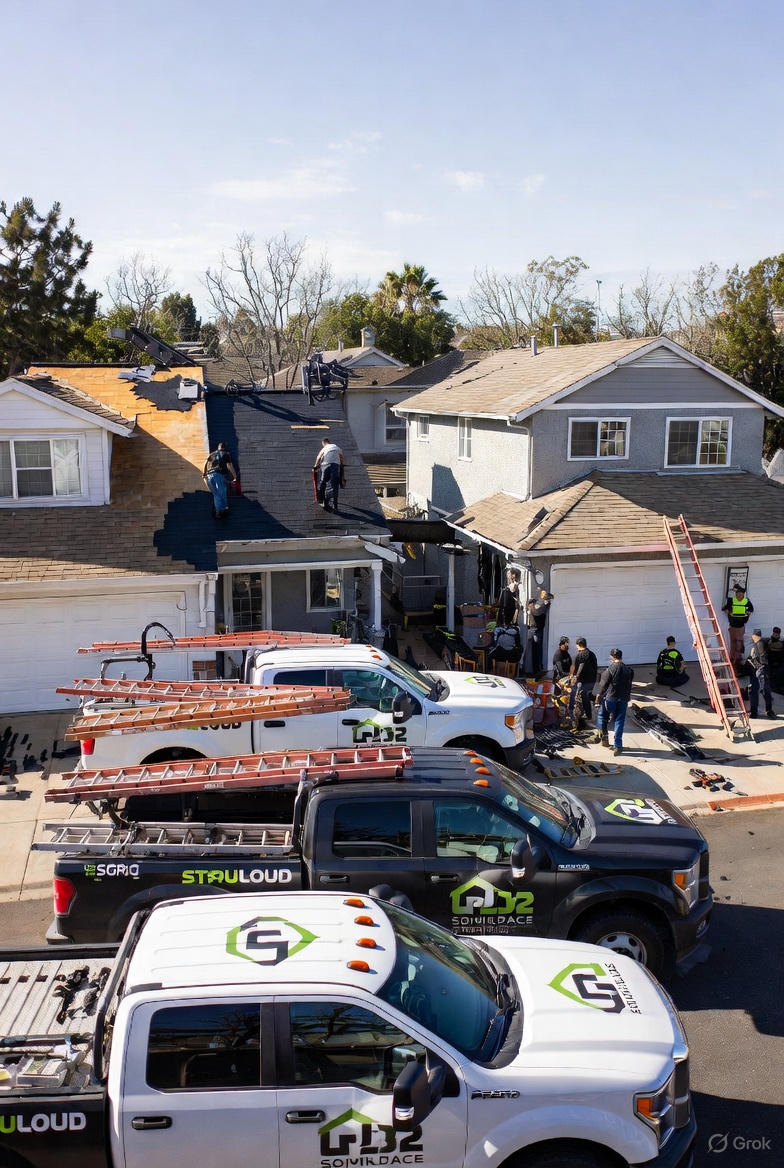
Hiring a contractor for a new asphalt roof is one of the most significant investments you’ll make in your home. It’s a complex, expensive, and critical job. With so much at stake, how do you sort through the endless search results to find a truly professional roofing installer? It’s tempting to just pick the cheapest bid, but this is one area where a low price almost always leads to a much higher cost down the road. An asphalt roof isn’t just a commodity; it’s a complex system. Finding a local company that specializes in asphalt is the first and most important step. This guide outlines the essential qualities to look for, the red flags to avoid, and the questions to ask to ensure you hire the right team for the job.
Why “Local” and “Asphalt” Specialization Are Non-Negotiable
Before we get into the checklist, let’s establish why these two words—”local” and “asphalt”—are so important.
- Why Local? A local company has a reputation to protect within your community. They can’t hide from their work. They are accountable, accessible for warranty claims, and have a deep understanding of your specific climate challenges, from heat and humidity to ice dams and wind.
- Why Asphalt Specialist? Asphalt shingles are the most popular roofing material in North America, but they are not foolproof. An architectural shingle, for example, has a specific, multi-layer construction and a precise nailing pattern that must be followed perfectly to validate its wind warranty. A general contractor who “also does roofs” may not have the specialized, factory-level training to install these systems correctly.
The High Stakes: More Than Just Shingles Over Your Head
A cheap, poorly installed roof is not a bargain; it’s a liability. The consequences go far beyond a few missing shingles.
A Roof Is a System, Not a Product
Your roof is not just the shingles you see from the street. A professional asphalt roofing company is installing a complete, integrated system designed to work in harmony:
- Decking: The wood sheathing that forms the roof’s foundation.
- Ice & Water Shield: A rubberized, waterproof membrane for the most vulnerable areas (eaves, valleys).
- Underlayment: The layer of water-resistant material (now typically synthetic) over the entire deck.
- Flashing: Metal pieces that protect joints and penetrations (chimneys, walls, pipes).
- Shingles: The primary water-shedding and protective layer.
- Ventilation: A balanced system (soffit and ridge vents) that lets the attic breathe.
The Dangers of a Bad Installation
If any part of this system is installed incorrectly, the results are catastrophic. Improper nailing voids the manufacturer’s warranty. Poorly installed flashing (the source of 90% of leaks) creates a direct path for water. Clogged or non-existent ventilation traps hot, moist air, “cooking” your shingles from below and leading to premature failure, mold, and rot.
Sign #1: Proper Licensing and Full Insurance (The “Deal-Breakers”)
This is the first and most important screening step. If a contractor cannot provide these documents, end the conversation immediately.
Verifying Their State and Local License
A license is your first layer of protection. It proves the contractor has registered with the state and has met a minimum standard of competency and knowledge of local building codes. You can (and should) verify their license number on your state’s official licensing board website.
The Two Types of Insurance You Must See
This is non-negotiable. A “fully insured” contractor must carry two specific policies:
- General Liability: This protects your property. If they drop a bundle of shingles on your car or a ladder through your window, this policy pays for the damage.
- Worker’s Compensation: This protects you from their employees. Roofing is a dangerous job. If a worker falls off your roof and the company doesn’t have worker’s comp, you could be held personally liable for their medical bills and lost wages. Your homeowner’s insurance will not cover it.
How to Verify: Ask for a Certificate of Insurance (COI)
Don’t just take their word for it. Ask for a Certificate of Insurance (COI) and check two things:
- The expiration dates.
- The name of the insurance provider.
Pro Tip: Call the insurance provider listed on the certificate to confirm the policy is active and in good standing. A fake or lapsed COI is a common tactic of fraudulent operators.
Sign #2: A Proven, Verifiable Local Reputation
A stable company has a long track record in your area.
A Permanent Physical Address
Look for a company with a real, physical office or workshop in your town, not just a P.O. box or a cell phone number. A permanent address is a sign of stability and investment in the community.
The Dangers of “Storm Chasers”
After a major hail or wind storm, your neighborhood may be flooded with “storm chasers.” These are out-of-town companies that follow bad weather, promise cheap, fast work (often “covering” your deductible, which is insurance fraud), and perform substandard installations. By the time your new roof starts to leak 18 months later, they are long gone. A local company will be there to honor its warranty.
Beyond Online Reviews: Ask for a List of Local Addresses
Online reviews are a good start, but they can be faked. A confident, professional roofer will be happy to provide you with a list of 10-15 addresses of recent jobs in your area.
Take an afternoon and do a “drive-by” inspection. Look for:
- Clean, straight shingle lines.
- Professional-looking flashing around chimneys.
- A clean, neat overall appearance.
Better yet, call a few of those references and ask them directly about their experience.
Sign #3: Elite Manufacturer Certifications
This is how you separate the “good” roofers from the “elite” professionals. Top shingle manufacturers (like GAF, Owens Corning, and CertainTeed) have stringent, invitation-only certification programs.
What Is a “GAF Master Elite” or “Owens Corning Platinum Preferred” Contractor?
These badges are not for sale. To earn them, a contractor must prove they have:
- Been in business for many years (often 5-10+).
- A proven, positive reputation in the community.
- Full, verified licensing and insurance (the manufacturer checks this for you).
- Passed extensive, factory-level training on the manufacturer’s specific products and installation techniques.
These certifications typically represent the top 1-3% of all roofing contractors.
The Link Between Certification and Superior Warranties
This is the most significant benefit to you. Because the manufacturer trusts the contractor’s installation methods, they empower them to offer special, enhanced warranties that no uncertified roofer can provide. This often includes long-term (25-50 year) warranties that cover not just the material but the workmanship (labor) as well, backed directly by the manufacturer.
Sign #4: A Meticulously Detailed, Itemized Estimate
Never, ever accept a one-line “lump sum” quote or a handshake deal. A professional bid is a multi-page document that breaks down every line item, allowing you to compare “apples to apples” with other bids.
Red Flag: The One-Line “Lump Sum” Quote
A quote that just says “New Roof: $16,000” is a massive red flag. It’s a blank check. It tells you nothing about the quality of materials being used, the scope of work, or how problems will be handled.
What Your Estimate Must Include (The “Apples-to-Apples” Test)
A professional, transparent estimate should explicitly detail:
- Scope of Work: “Tear off one (1) existing layer of asphalt shingles and felt paper.”
- Specific Materials: The brand and product name (e.g., “GAF Timberline HDZ Architectural Shingles, Color: Charcoal”).
- System Components:
- Underlayment: “Install new synthetic underlayment on all decking.”
- Ice & Water Shield: “Install new ice & water shield in all valleys, at all eaves, and around all penetrations.”
- Flashing: “Replace all pipe boots and install new step/counter flashing at chimney.”
- Starter Strips: “Install manufacturer-required starter strip shingles at all eaves and rakes.”
- Ventilation: “Install X feet of new ridge vent and ensure soffit vents are clear.”
- Decking Contingency: This is critical. A roofer cannot see your wood decking until the old roof is off. A good contract will state, “If rotted or damaged decking is found, it will be replaced at a cost of $X per sheet.” This prevents a massive, open-ended surprise bill.
- Cleanup and Disposal: “Includes all dump fees and site cleanup with magnetic nail sweep.”
Sign #5: A Clear Understanding of the Entire Roofing System
A true professional is a diagnostician, not just a salesperson.
They Inspect the Attic (Ventilation and Decking)
A contractor who only measures your roof from the ground (or a satellite) and gives you a price is not a professional. A true expert must look in your attic. This is the only way to:
- Check Ventilation: They will measure your soffit (intake) and ridge (exhaust) vents to ensure you have a balanced system. Poor ventilation is the #1 killer of asphalt shingles.
- Inspect Decking: They will look at the underside of your roof deck for signs of delamination, old leaks, or mold before the job starts.
They Talk About Flashing, Underlayment, and Ice Shields
Does the salesperson just focus on the shingle color, or do they take the time to explain how they will protect the most vulnerable parts of your roof? Ask them about their flashing technique. A pro will always replace old flashing, not just “reseal it” with caulk.
Handling Complex Roof Geometries
A true expert also understands how different roof types interact. Does your home have a low-slope porch or a modern addition? They will have the expertise to manage these complex transition points, which are common failure points for inexperienced crews.
Sign #6: A Strong Workmanship Warranty
This is where a company puts its money where its mouth is. You will have two warranties.
Manufacturer Warranty vs. Workmanship Warranty: What’s the Difference?
- Manufacturer Warranty: This covers defects in the shingle itself (e.g., a “30-Year” shingle). This is almost never the source of a problem.
- Workmanship Warranty: This covers errors in the installation (e.g., an improperly flashed chimney that leaks). This is the warranty you actually care about.
A company that only offers a 1- or 2-year workmanship warranty is not confident in its own labor. Look for a company that provides a 10-year, 25-year, or even a (non-prorated) lifetime workmanship warranty. As mentioned, the best ones are backed by the manufacturer.
Sign #7: Transparent Communication and No High-Pressure Tactics
The company’s behavior before you sign is a strong indicator of what they’ll be like after you sign.
Who Is Your Point of Contact?
Will you have a dedicated project manager who is your single point of contact? Or will it be a different salesperson, scheduler, and crew foreman every time you call? A clear communication channel is key to a low-stress project.
Red Flag: The “Sign Today” Discount
“This price of $14,500 is only good if you sign today.” This is a high-pressure sales tactic designed to stop you from doing your research and getting other bids. A professional contractor will provide a fair, detailed quote that is valid for a reasonable period (e.g., 30 days) to allow you time to make an informed decision.
Your Vetting Checklist: Questions to Ask Every Potential Roofer
- “What is your full company name and physical address?”
- “Can you provide me with your state license number?”
- “Can you have your insurance agent send me a Certificate of Insurance for both General Liability and Worker’s Compensation?”
- “Are you certified by any shingle manufacturers?” (Ask to see the certification.)
- “Will you be using subcontractors or your own employees?”
- “Will you be inspecting my attic?”
- “Does your estimate include replacing all flashing, or do you reuse it?”
- “What is your written workmanship warranty, and what does it cover?”
- “What is your contingency plan and cost for replacing rotted decking?”
Conclusion: Your Best Investment Is in a Vetted, Local Professional
Choosing a local asphalt roofing company is a decision that will protect your home for decades. It’s about finding a partner, not just a contractor. The lowest bid rarely accounts for the true cost of voided warranties, improper installation, or a lack of insurance. By focusing on these key signs—verifiable licensing and insurance, elite certifications, transparent estimates, and a strong workmanship warranty—you are not just buying shingles. You are investing in a proven, professional service that will stand by its work. An expert asphalt roofer who also has the skill to handle a complex flat roofing service or a simple repair with the same level of professionalism is the partner you want. Your peace of mind is worth the extra due diligence.