
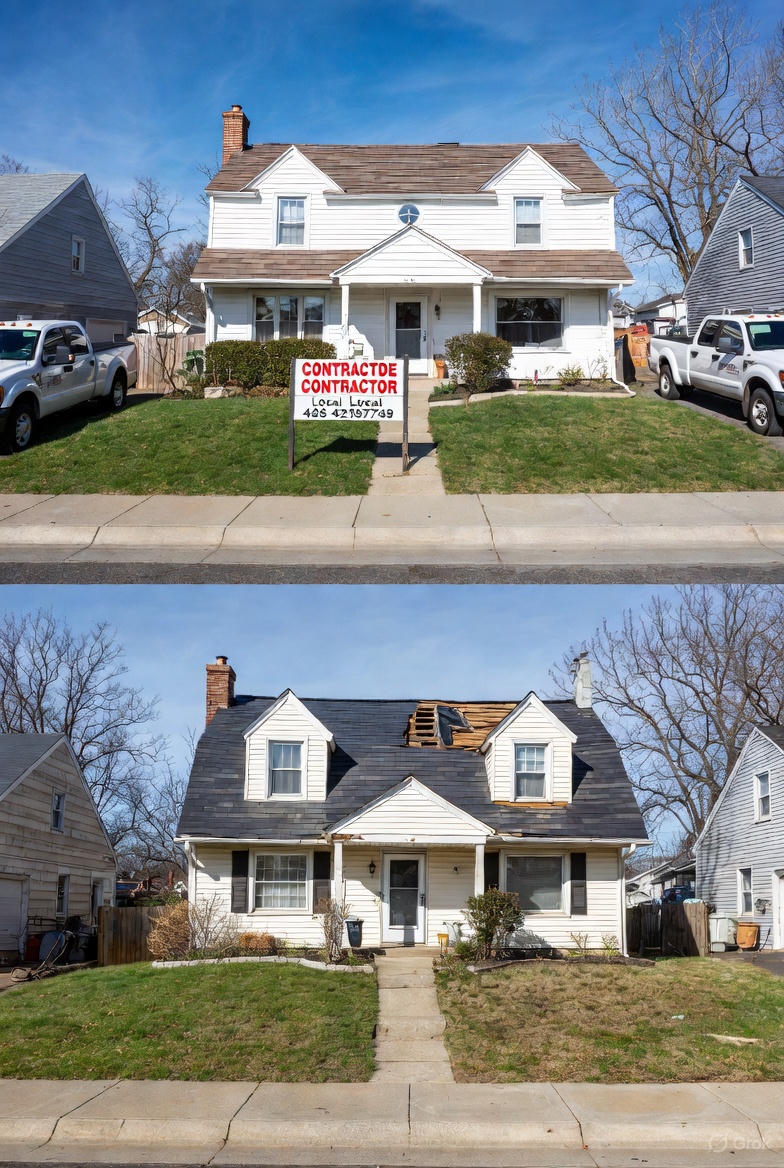
That frantic online search for a “roofing and siding company near me” often happens under duress. You’ve spotted a water stain on the ceiling, found shingles in your yard after a windstorm, or noticed your siding is cracked and warped. The urgency can make it tempting to hire the first contractor who promises a quick, cheap fix. This is, without question, one of the biggest mistakes a homeowner can make.
Choosing an exterior contractor is not like hiring a lawn service. This is a major construction project involving your home’s most critical line of defense. The difference between a reliable professional and a cut-rate operator is the difference between a 30-year, worry-free system and a continuous nightmare of leaks, voided warranties, and potential legal trouble.
So, how do you sort the professionals from the pretenders? Reliable contractors leave a clear trail of positive signals. You just need to know what to look for.
Why Vetting Your Contractor is the Most Critical Step
A modern roofing or siding system is a complex assembly of components. It’s not just the shingles or panels you see; it’s the underlayment, the ice and water shield, the flashing, the ventilation, and the fasteners. These elements must be installed in perfect harmony according to strict manufacturer specifications.
The single greatest cause of premature roof and siding failure is not product defects—it’s installation error.
A shoddy installer can void your 50-year material warranty in a single afternoon. They can create “hidden” leaks that won’t show up for months, silently rotting your roof deck and wall studs. Hiring the wrong company doesn’t just waste your money on the project; it creates a cascade of expensive structural problems. Your goal isn’t just to find someone who can nail a shingle; it’s to find a partner who will protect your entire home.
Key Sign #1: They Are Fully Licensed and Insured (And Prove It)
This is the absolute, non-negotiable starting point. If a contractor cannot or will not provide proof of proper licensing and insurance, end the conversation immediately. “Trust me” is not an acceptable answer.
The “Non-Negotiables”: General Liability vs. Worker’s Comp
You need to see proof of two specific types of insurance:
- General Liability: This protects your property. If a contractor drops a bundle of shingles on your new car, breaks a window, or damages your landscaping, this policy pays for it. If they don’t have it, you or your homeowner’s insurance will be on the hook.
- Workers’ Compensation: This protects you from liability for your employees. If a roofer falls from your ladder and the company doesn’t have workers’ comp, you could be held personally liable for their medical bills, lost wages, and disability. It can be financially ruinous.
How to Verify Their Insurance (Don’t Just Take Their Word)
A professional contractor will be happy to provide a Certificate of Insurance (COI). But your job doesn’t end there. Look for the name of the insurance agency on the certificate and call them directly to verify that the policy is active and has not lapsed. A COI can be faked or outdated. A 10-minute phone call provides complete peace of mind.
Key Sign #2: They Have a Permanent, Local Presence
Your search for a reliable company should be focused locally. A permanent, physical address in your community is a powerful sign of stability and accountability.
The Dangers of “Storm Chasers”
After a major hailstorm or wind event, your neighborhood will be flooded with “storm chasers.” These are out-of-state companies that follow bad weather, knock on doors, and pressure homeowners into signing contracts. They perform fast, cheap work using subcontracted crews, and by the time you discover the leaks and installation errors, their trucks are already in the next state. They have no local reputation to protect and no intention of honoring a warranty.
Why a Physical Office and Local Phone Number Matter
A contractor with a real office, local phone number, and branded trucks has invested in the community. They have a reputation to uphold. If your roof has an issue five years from now, you know exactly where to find it. A transient “exterior contractor near me” who operates out of a P.O. box and a cell phone offers no such guarantee.
Key Sign #3: They Provide Impeccable, Transparent Communication
From the very first phone call, pay close attention to how they communicate. Professionalism here is a strong indicator of how the entire project will be managed.
Do They Answer the Phone?
When you call, do you get a professional receptionist or a crackling, unidentified voicemail box? Do they return your inquiry promptly? If they are hard to get hold of when they’re trying to earn your business, imagine how hard it will be when they already have your money.
The Quality of Their Inspection and Consultation
A reliable contractor is a diagnostician first.
- Red Flag: A roofer who gives you a price after a two-minute walk around your house or, even worse, from a satellite image alone.
- Green Flag: A contractor who performs a thorough inspection. This means getting on the roof (if safe to do so) to check flashing, boots, and shingle condition. It also means asking to look in your attic to check for ventilation, water stains on the underside of the decking, and insulation issues.
They should ask you questions: “What problems have you noticed?” “Are any rooms particularly hot in the summer?” This shows they are interested in solving your problem, not just selling you a product.
Key Sign #4: Their Estimates Are Detailed, Itemized, and Professional
The estimate is where a contractor truly reveals their professionalism. You must get at least three bids, and you cannot compare them if they aren’t detailed.
Red Flag: The “One-Line” Quote
If you receive a bid that says, “New roof: $18,500,” throw it in the trash. This is a blank check. It tells you nothing about the materials, the scope of work, or how “unforeseen” problems will be handled.
What a Professional Bid MUST Include
A professional, itemized estimate is a multi-page document that breaks down the entire project. It should include:
- Scope of Work: A step-by-step list (e.g., “Tear off all (1) existing layer of shingles,” “Dispose of all debris in a company-owned dumpster”).
- Specific Materials: The exact brand and product line. Not just “new shingles,” but “Owens Corning Duration shingles in ‘Onyx Black’.”
- Underlayment: Does it specify a cheap felt paper or a modern, high-performance synthetic underlayment?
- Ice & Water Shield: Does it specify where this crucial membrane will be installed? (It should be at all eaves, valleys, and around all penetrations).
- Flashing: This is critical. Does the bid say “Install new step, apron, and counter flashing” or “Re-use existing flashing”? A true professional will almost always replace old flashing, which is a primary source of leaks.
- Decking Contingency: This is the #1 sign of an honest contractor. They cannot know the condition of your roof decking until the old shingles are off. The contract must state a clear price for replacing rotted or damaged wood (e.g., “$XX per 4×8 sheet”). This protects you from a massive, open-ended surprise bill.
- Permits & Cleanup: It should state that the contractor is responsible for pulling all permits and for final site cleanup, including a magnetic sweep for nails.
- Payment Schedule: A 10-30% deposit is normal. If a contractor asks for 50% or more upfront, it’s a major red flag.
Key Sign #5: They Have a Verifiable Track Record
A good contractor is proud of their work and eager to prove it.
Moving Beyond Online Reviews
Online reviews are a good starting point, but they don’t tell the whole story. Look for trends. Does the company have a long history of positive reviews? How do they respond to negative ones? A professional, solution-oriented reply to a bad review is often a better sign than 100 perfect 5-star ratings.
The Power of a Local Reference List and Drive-By-Ready Addresses
This is the ultimate test. Ask the contractor for a list of 10-15 recent jobs in your area.
- Ask for addresses: A confident contractor will provide these. Take an afternoon and drive by them. Does the work look clean? Are the lines straight? Does the home look well-protected?
- Ask for phone numbers: Call 3-5 of these references. Ask them:
- Would you hire this company again?
- Did the final price match the estimate?
- Were there any problems, and how were they handled?
- Was the crew professional, and was the cleanup thorough?
Key Sign #6: They Hold Manufacturer Certifications
This is a powerful, third-party endorsement. Top manufacturers like GAF, CertainTeed, and James Hardie do not let just anyone install their products. They have certification programs that vet contractors for stability, insurance, and quality.
What is a GAF Master Elite or James Hardie Preferred Contractor?
These titles are not just marketing fluff. They mean the contractor has been professionally trained by the manufacturer to install their products to exact specifications. These “Master” or “Preferred” contractors typically represent the top 2-5% of contractors in the country.
The Link Between Certification and Superior Warranties
This is the real benefit to you. A certified installer is often the only one who can offer you the manufacturer’s best, non-prorated, transferable warranties—the ones that cover not only the materials but also the workmanship for 25 or even 50 years. This warranty is backed by the manufacturer, so if your contractor goes out of business, you are still protected.
Key Sign #7: They Don’t Use High-Pressure Sales Tactics
A reliable contractor runs their business on a foundation of trust and value, not fear and pressure.
Spotting the “Sign Today” Discount
Be extremely wary of high-pressure sales. This includes:
- “This 20% discount is only good if you sign before I leave.”
- “We have extra materials from a job down the street and can give you a deal.”
- “We’ll cover your insurance deductible.” (This is insurance fraud).
These are all tactics designed to stop you from getting other bids and doing your research.
A Confident Contractor Trusts Their Value
A professional contractor will give you their best price, explain its value, and encourage you to get other (apples-to-apples) bids. They are confident that their combination of materials, workmanship, insurance, and warranties will be the superior long-term value, and they don’t need to trick you into signing.
Key Sign #8: They Discuss Workmanship Warranties Upfront
This is where you separate the good from the great. There are two types of warranties, and understanding the difference is key.
Material vs. Workmanship: The Critical Difference
- Material Warranty: This comes from the manufacturer (e.g., GAF, James Hardie). It covers defects in the product itself (e.g., a shingle that fails prematurely).
- Workmanship Warranty: This comes from the contractor. It covers errors in the installation. If your roof leaks because the flashing was installed incorrectly, this is the warranty that covers the damage.
A reliable contractor will provide a clear, written workmanship warranty of at least 5-10 years. An elite, certified contractor may offer 25 years or more. A company that only offers a one-year “tail-light” warranty (it’s good as long as you can see their tail lights) does not stand behind its own work.
A Quick-Reference Vetting Checklist
Use this as a scorecard when evaluating contractors:
- Provided valid General Liability and Worker’s Comp certificates?
- Is verified insurance active with the provider?
- Have a permanent, local office and phone number?
- Communication was prompt, professional, and clear?
- Performed a thorough inspection (roof and/or attic)?
- Provided a detailed, itemized bid?
- Does the bid include a clear contingency plan for rotted wood?
- Bid specifies replacement of all-new flashing?
- Provided a list of 10+ local addresses and references?
- Holds a top-tier manufacturer certification (e.g., Master Elite)?
- Offered an enhanced manufacturer-backed warranty?
- Provided a clear, written workmanship warranty (10+ years)?
- Used no high-pressure sales tactics?
Conclusion
Finding the right contractor is a process of verification, not just a gut feeling. The cheapest bid is rarely the best value. The damage from a failed roof or siding job will cost many times more than the few thousand dollars you might “save” by hiring an uninsured or unqualified operator.Look for the contractor who checks every box on this list. By prioritizing documented proof of insurance, a strong local reputation, transparent estimates, and certified quality, you are protecting your investment. You’re not just buying a new roof; you are investing in professional roofing installation services that will protect your home and your family for decades to come.